
Remedial
FRA remedial works for firestopping: what to do after the assessment
FRA remedial works for firestopping: what the fire risk assessment duty requires, how to scope the actions, who should fix them and what proof closes each one.
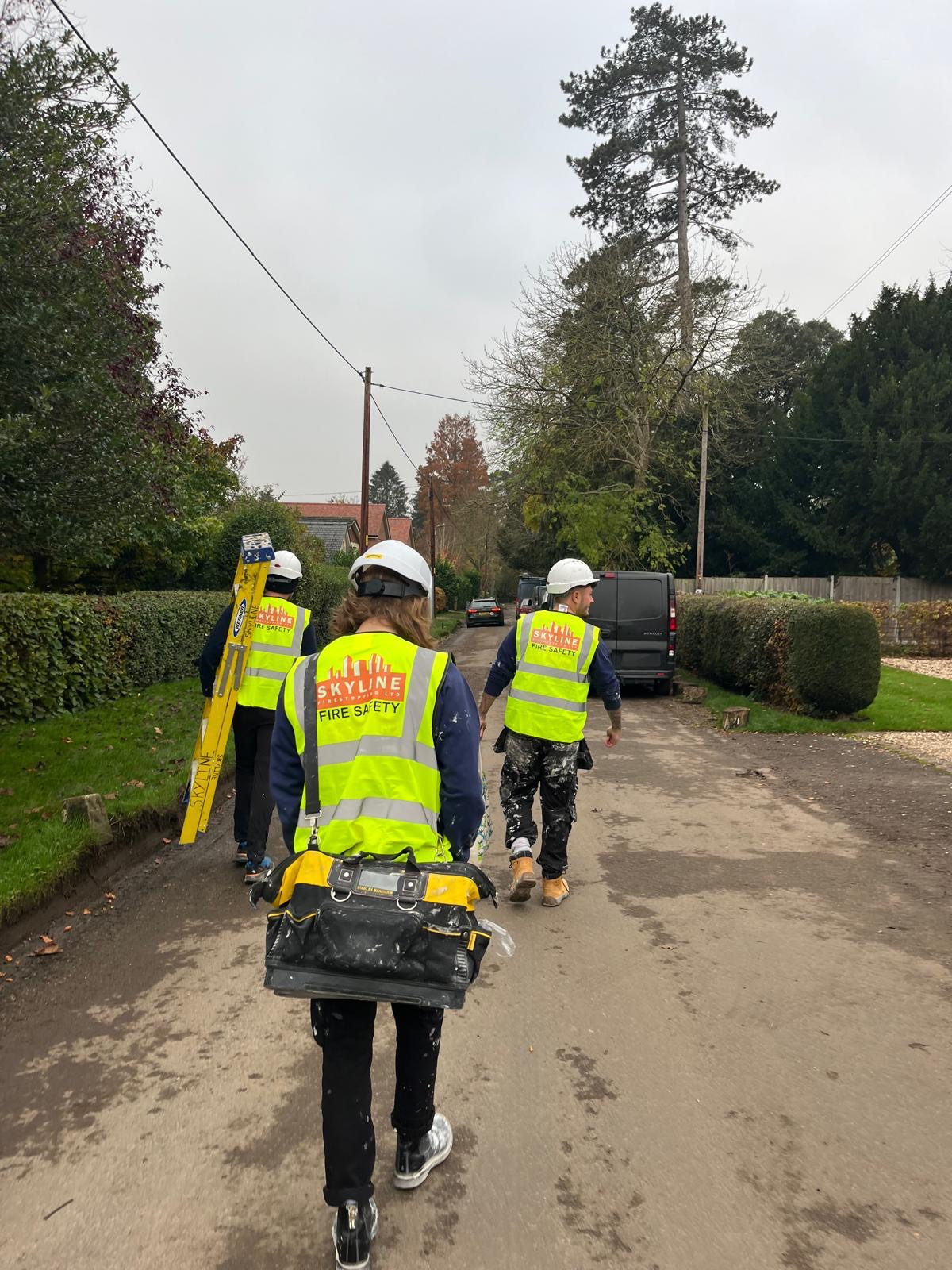
FRA remedial works are the firestopping actions listed in a fire risk assessment's action plan. Where the findings are in firestopping, the seals must be put right and shown to hold; Skyline closes each one with a tested system and a photographed record of every repair. Article 9 of the Fire Safety Order requires the responsible person to record the assessment. Separately, an enforcement notice under article 30 sets a period of not less than 28 days.
Firestopping defects can remain hidden until a survey or audit opens the ceiling void. This article explains what FRA remedial works are in law, why firestopping ends up on the list, how to scope the actions so the quote survives, and what has to be true before an action can be called closed.
What FRA remedial works are
Article 9 of the Regulatory Reform (Fire Safety) Order 2005 requires the responsible person to make a suitable and sufficient assessment of the risks to which relevant persons are exposed, for the purpose of identifying the general fire precautions they need to take. Where the actions that follow concern firestopping, Skyline's remedial page calls them the FRA remedial works listed in an action plan.
In the Order, general fire precautions include measures to reduce the risk of fire on the premises and the risk of the spread of fire on the premises. Section 1 of the Fire Safety Act 2021 added to the Order that where a building contains two or more sets of domestic premises, the things to which the Order applies include the building's structure and external walls and any common parts.
Home Office guidance on section 156 of the Building Safety Act 2022 adds that you must now record the fire risk assessment in full, including all the findings.
Why firestopping actions appear on a fire risk assessment
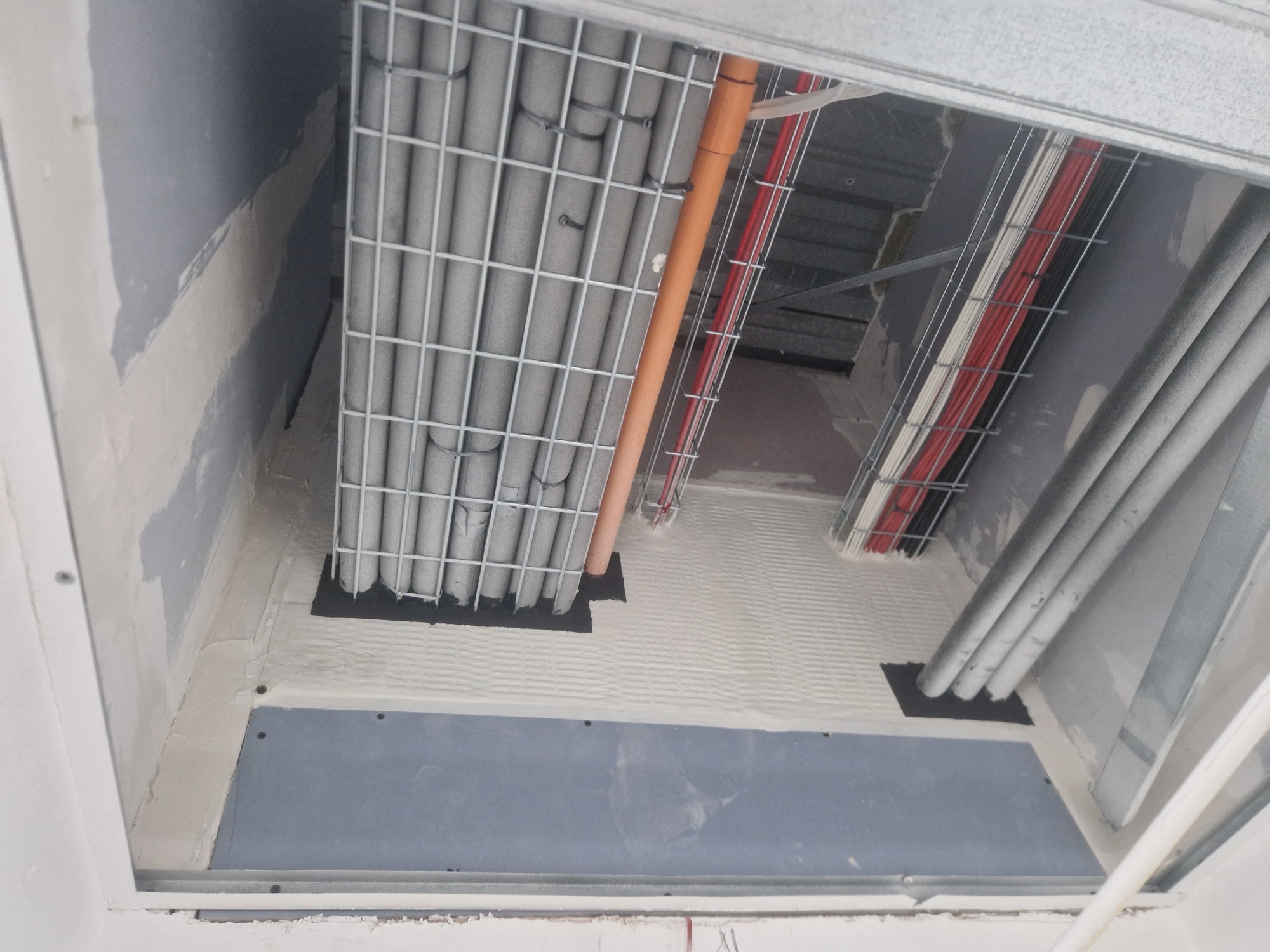
Approved Document B says effective compartmentation relies on fire resistance being continuous at the join between elements forming a compartment, and on any openings between two compartments not reducing the fire resistance. Openings through a fire resisting element for pipes, ducts, conduits or cable should be as few as possible, as small as practicable, and fire-stopped.
The defects a survey finds on the compartment line are failed or missing penetration seals, damaged or missing fire and cavity barriers, breached compartment walls and floors, and undocumented previous work: seals with no record behind them. Tom Ford, Skyline's director, puts the common ones this way: "people love spraying, expanding pink foam into any gap and then thinking that it's fire-stopping", and "Proper fire-stopping installation should have tags", with the company's name, who installed it and the date it was installed.
How to scope the actions so the price holds
- Take the FRA action list item by item and give each firestopping action a location: the floor, the riser, the wall or slab, and the service passing through it.
- Where the assessment carries compartmentation actions or intrusive-survey limitations it could not evidence, get the concealed line opened and recorded before you price the fix. Skyline's Intrusion Survey does that floor by floor, with every breach photographed, located and classified.
- Ask the contractor to name the tested system for each repair, not a material.
- Keep the survey report with the building. In Skyline's words, a survey report and its findings belong to the building, so any competent certified contractor can price them.
Skyline prices fire remedial works and remedial firestopping against the findings and evidences each repair, whoever did the original survey.
What closes an FRA remedial works action
Every remedial item should run the same three columns: the survey finding that opened it, the tested system that closed it, and the evidence that proves it. On a Skyline repair, the barrier is rebuilt exactly as tested, and each opening is closed with the system tested for what passes through it. The repair is photographed before cover-up and tagged, and the finding is closed with the evidence retained.
Article 17 of the Order says that, where necessary in order to safeguard the safety of relevant persons, the responsible person must ensure the premises and the facilities provided in respect of them are subject to a suitable system of maintenance and are maintained in an efficient state, in efficient working order and in good repair. Article 9 says any such assessment must be reviewed by the responsible person regularly, and particularly if there has been a significant change in the matters to which it relates. Keep the closed action's photograph and tag available for the next review and for any insurer or enforcing-authority query.
If an enforcement notice has been served
Under article 30 of the Fire Safety Order, if the enforcing authority is of the opinion that the responsible person has failed to comply with the Order, it may, subject to article 36, serve an enforcement notice. The notice must state why, specify the provisions which have not been complied with, and require steps to remedy the failure within a period of not less than 28 days from service. Subject to article 36, it may include directions as to the measures the authority considers necessary. The steps the notice specifies must be completed within its period; where the failures are in firestopping or compartmentation, keep the evidence showing how each specified failure was remedied, so the FRA remedial works can be checked against the notice.
Who should carry out the work
Skyline is a specialist firestopping contractor for higher-risk buildings across Greater London and the M4 corridor, and holds BM TRADA Q-Mark certification. Remedial work is a trust decision: someone else's work failed, and you are choosing who fixes it. For what a tested seal is and why the line matters, read what compartmentation is.
Frequently asked questions
Who carries out fire stopping remedial works after a failed survey?
A firestopping contractor, working from the survey findings. The survey report and its findings belong to the building, so any competent certified contractor can price them. Skyline prices fire remedial works against the findings, installs tested systems and evidences each repair, whoever did the original survey.
How soon must FRA remedial works be done?
Article 9 of the Fire Safety Order requires the responsible person to make a suitable and sufficient assessment and to review it regularly so as to keep it up to date. It is an enforcement notice under article 30 that sets a specific period for remedying a failure, and that period cannot be less than 28 days from the date of service of the notice.
What evidence should close an FRA firestopping action?
The survey finding that opened it, the tested system that closed it, and the proof: a photograph taken before cover-up, a tag naming the installer and the date, and the location.
Our firestopping contractor's work failed inspection. How do we find a certified replacement?
Check the scheme registers: FIRAS, IFC Certification and BM TRADA each publish their certified companies. Then ask the replacement to name the tested system for each repair and to photograph and tag every seal before cover-up. Skyline names the defects it puts right.